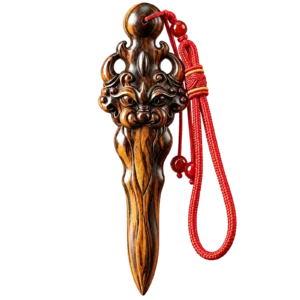
The Dragon – Lightning-Struck Jujube Dragon Carving Car Charm
One of One — this exact piece
Founding piece: early orders ship with upgraded priority service, gift boxing, and a hand-numbered card.
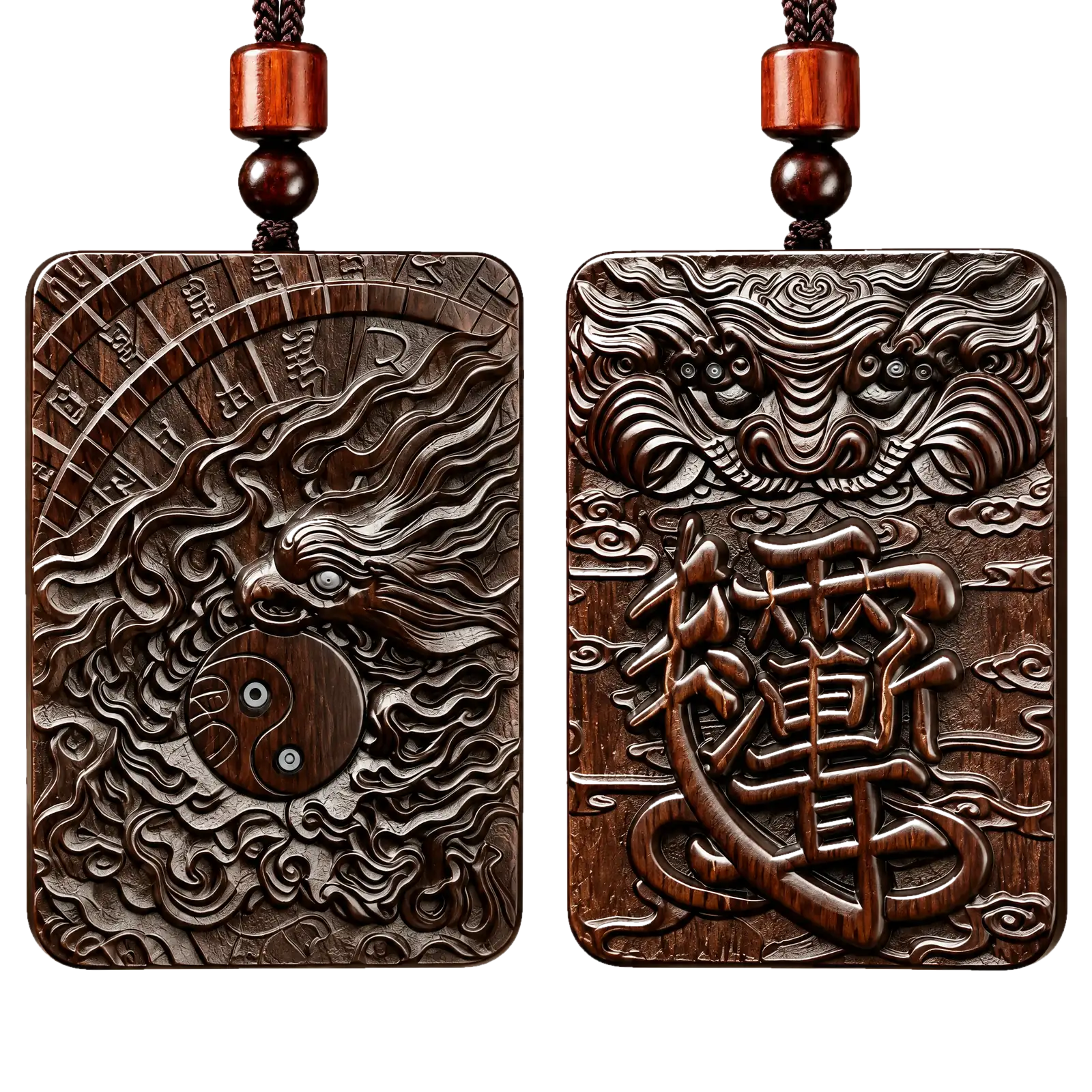
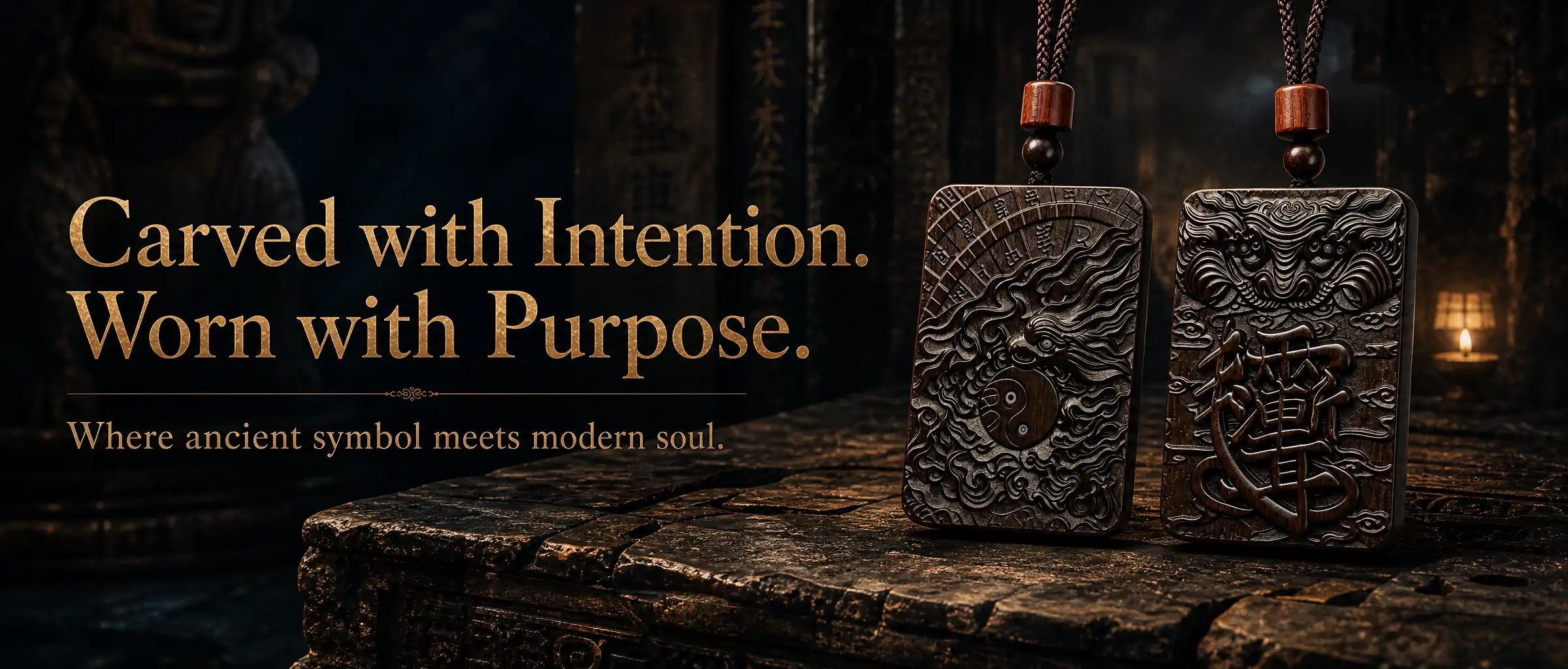
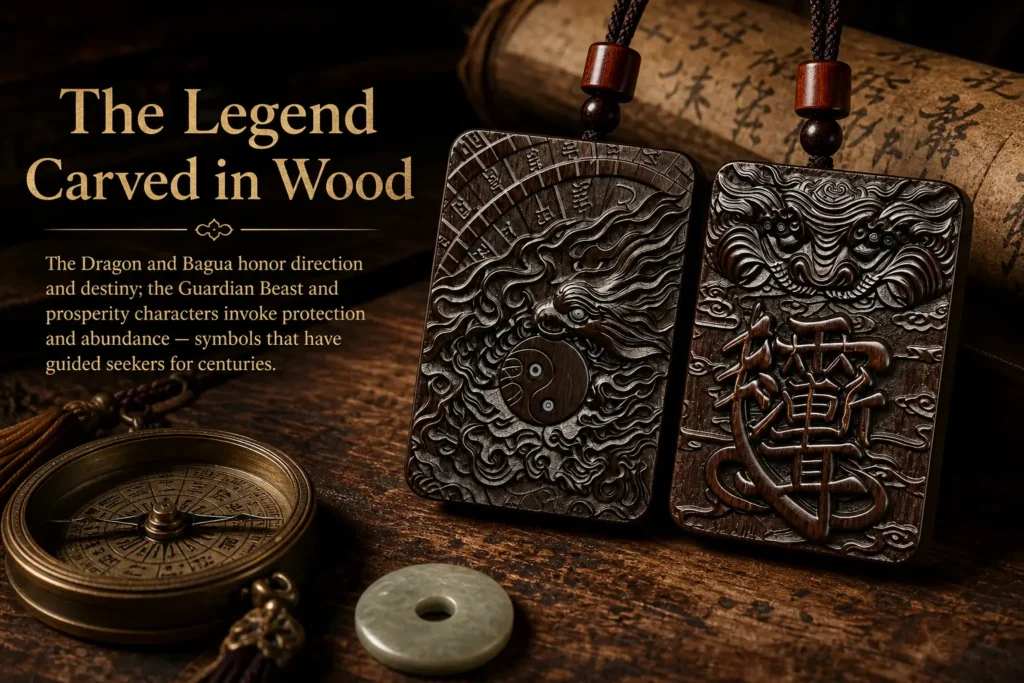
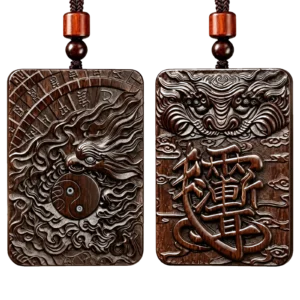
The collection’s only full dragon, coiled in deep relief across struck jujube — the dragon of the legend that named Longhu Mountain, sized to travel.
$99.00
Payment Methods:
龙 · 山之其名
THE DRAGON
The collection’s only full dragon, coiled across struck jujube in deep relief — carved for the legend that named the mountain: when the elixir was done, the dragon was there first.
Where the mountain keeps its name, the dragon keeps its post. The legend everyone learns is the spectacular half — the elixir finished, the sky answering with dragon and tiger. What the story mentions but never dwells on is the afterward: someone must stay and watch the vein. The Dragon was carved for that quiet office. It is not the festival dragon that chases its pearl across the sky; it is the one that remained. Hung where the windshield meets the horizon, it does what it has always done — it watches the road the way it once watched the mountain. Chosen by lightning. Carved by hand. One of one.
THE CRAFT
The Naming Legend, Made Carvable
Tradition tells that when Zhang Daoling’s elixir was complete, a dragon and a tiger appeared, and the mountain took their names. This piece carries the first half of that name — the mountain’s own dragon, hung in your car.
A Story You Can Point To
Most souvenirs explain nothing; this one opens a conversation — “why Dragon-Tiger?” has a real answer, and it hangs on your mirror.
Half a Name, Whole Heritage
The mountain’s name has two halves; the dragon is the one tradition saw first — carrying it is carrying the legend’s opening line.
Copy That Matches the Art
The banner above the piece already reads “The Dragon of the Longhu Mountain” — story, art and object are one continuous line.
THE CRAFT
Scales Cut, Not Drawn
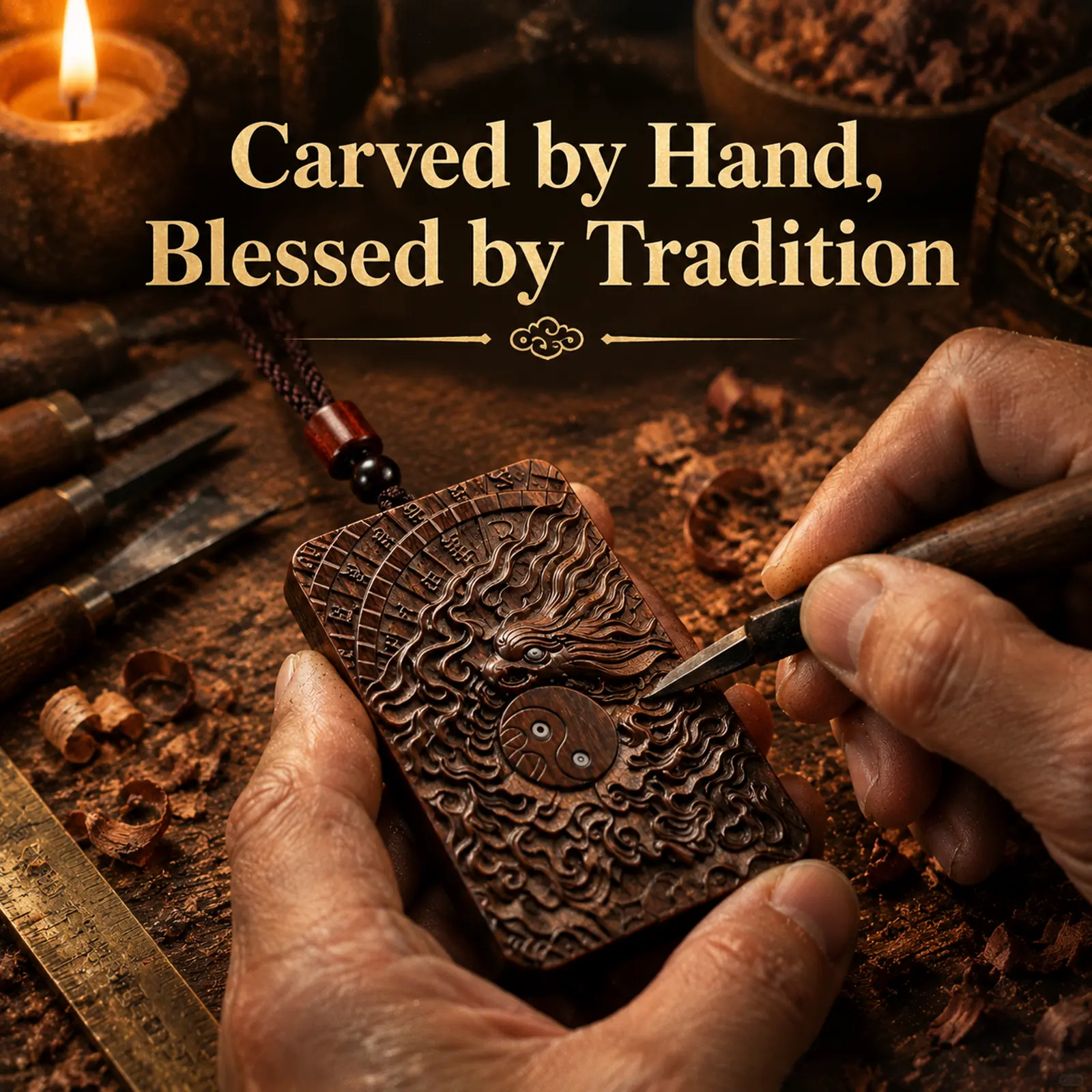
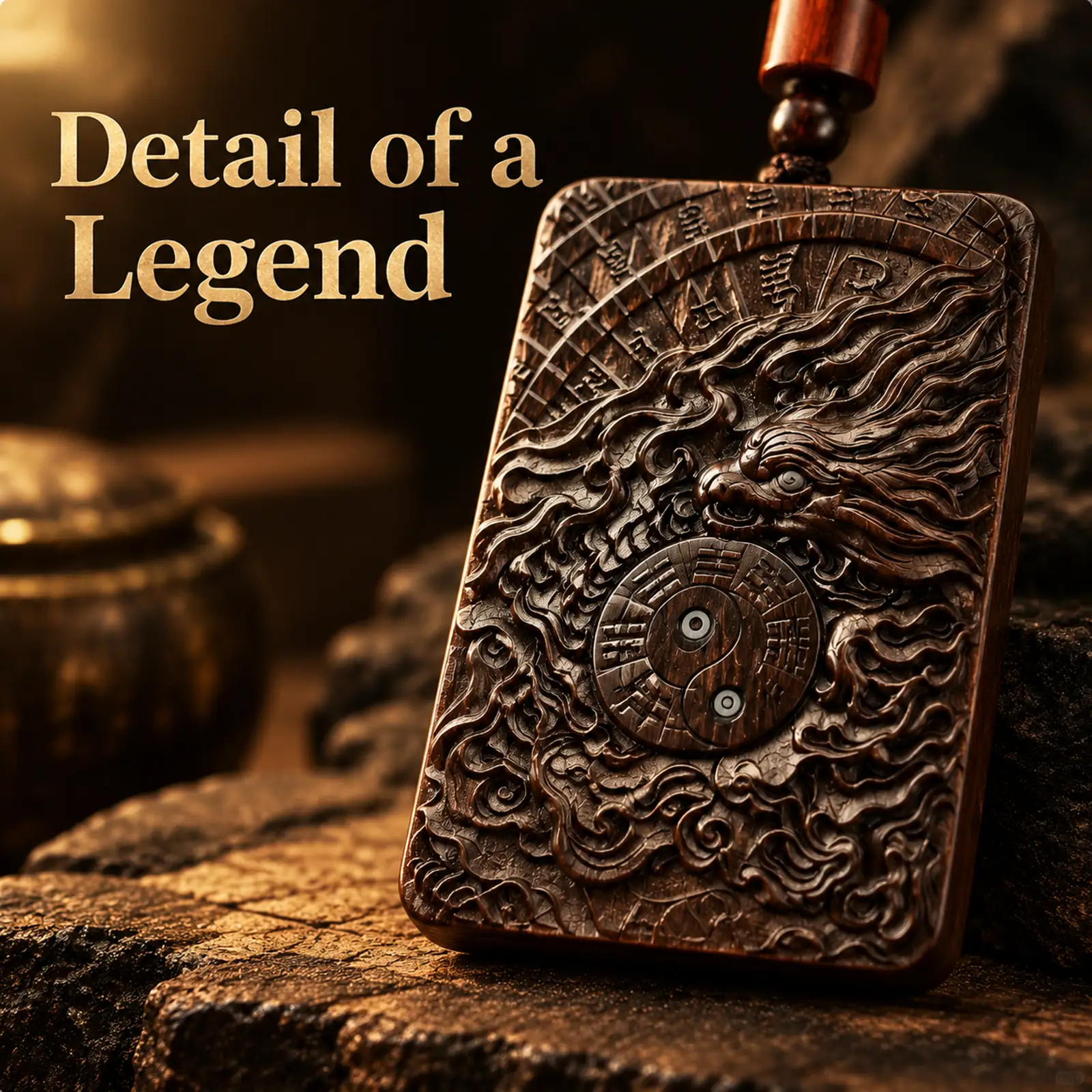
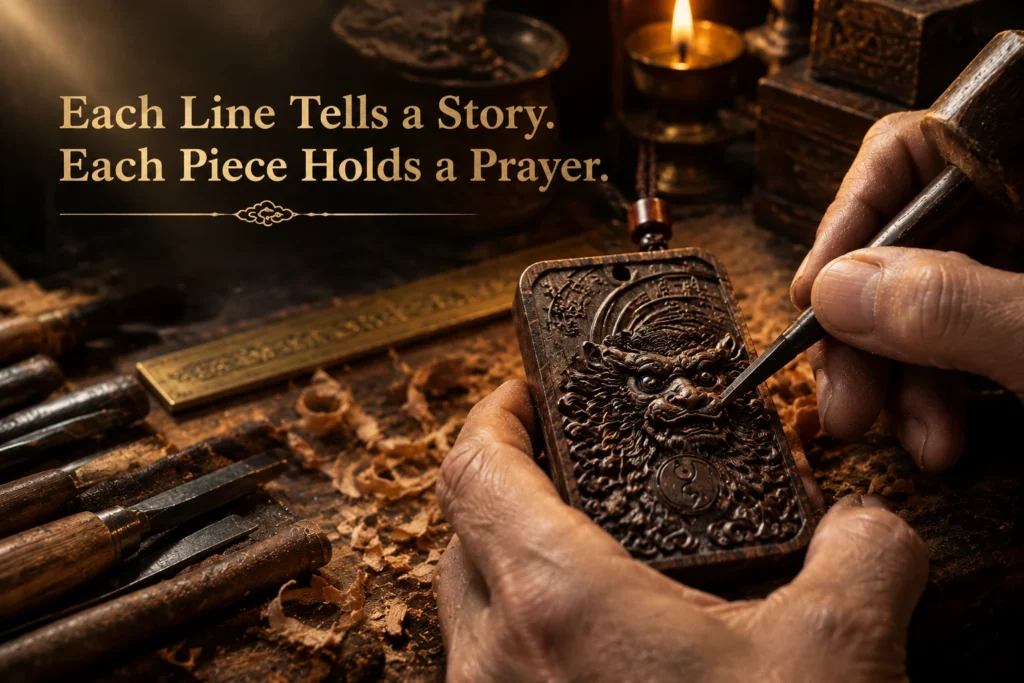
Every scale is knife work. The body rises from the wood in deep relief the way temple dragons rise from their columns — readable from every angle, in light and in shadow.
The Column-Dragon Grammar
Temple columns carry dragons in deep relief for a reason: a body that must read from every angle of the hall. This piece borrows that exact grammar.
Shadow Does Half the Work
Deep relief gives each scale its own shadow; as the car turns, light moves and the body seems to swim — a flat print could never.
No Two Dragons Alike
The grain decides each scale’s flow, so this dragon exists once — a second carving on different wood would coil differently.
THE CRAFT
Guardian of the Vein
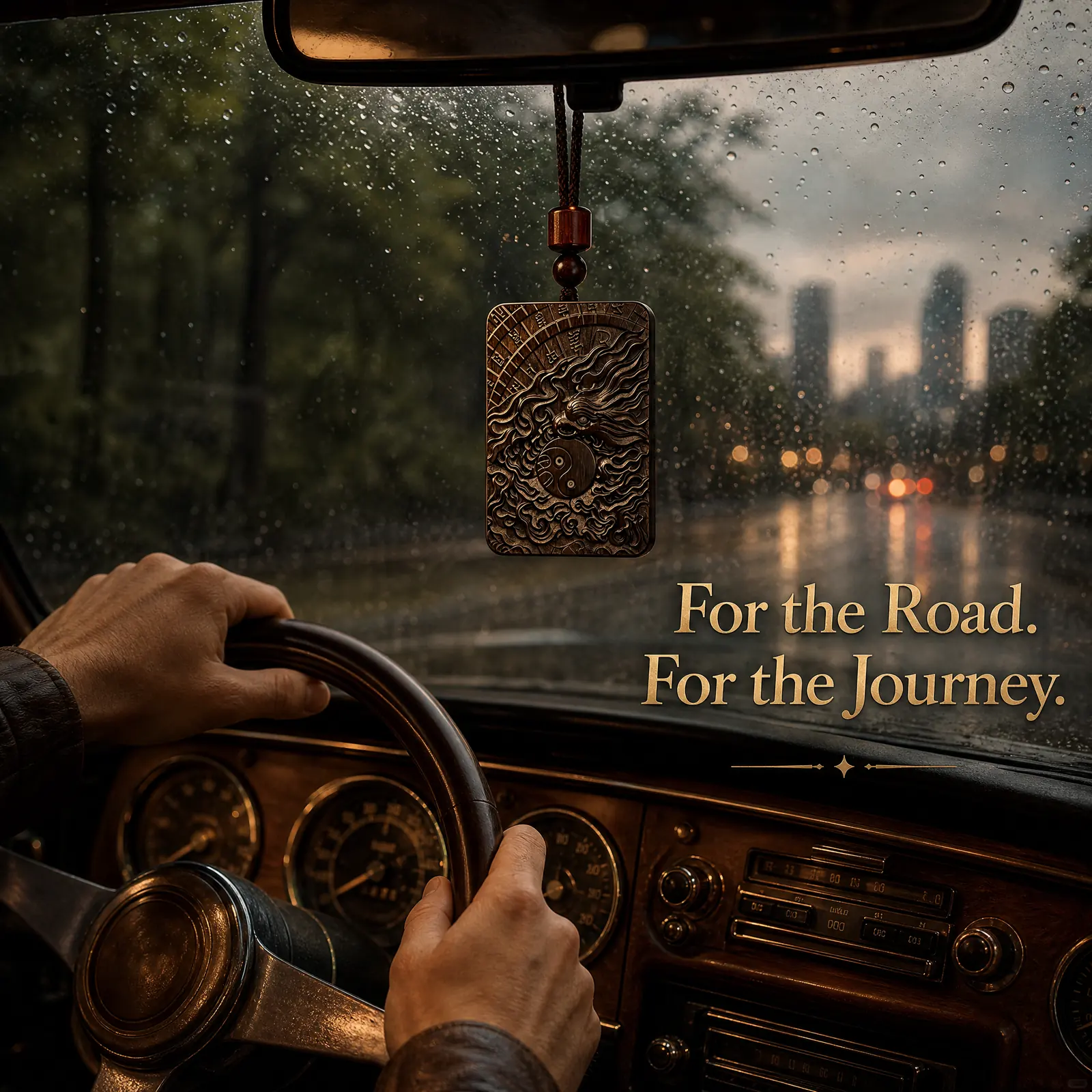
In tradition, the dragon watches over the vein of the mountain. This one is posted over the vein of the road — a quiet wish for the miles, for those who drive far and mean to arrive.
Dragons Keep the Veins
Tradition holds that where the dragon settles, water follows and the land lives — the guardian of flows, not of walls.
The Road Is the Modern Vein
Your commute is a current — cars instead of water. The post simply moved from the mountain gorge to the windshield.
A Wish for Arrival
Not a promise of safe passage — a quiet wish for the miles, the old way of saying “come home whole.”
Yes. Each piece is carved from jujube wood recovered after a natural lightning strike — the dense, darkened grain is the wood's own record of that event.
Why is every piece one of one?
Lightning marks every tree differently, and each carving follows the grain of that single piece of wood. No two talismans are alike; the piece you see is the piece you receive.
How do I care for the wood?
Keep it dry, avoid prolonged direct sunlight, and rub occasionally with a drop of natural oil to keep the grain deep and quiet.
How is it shipped?
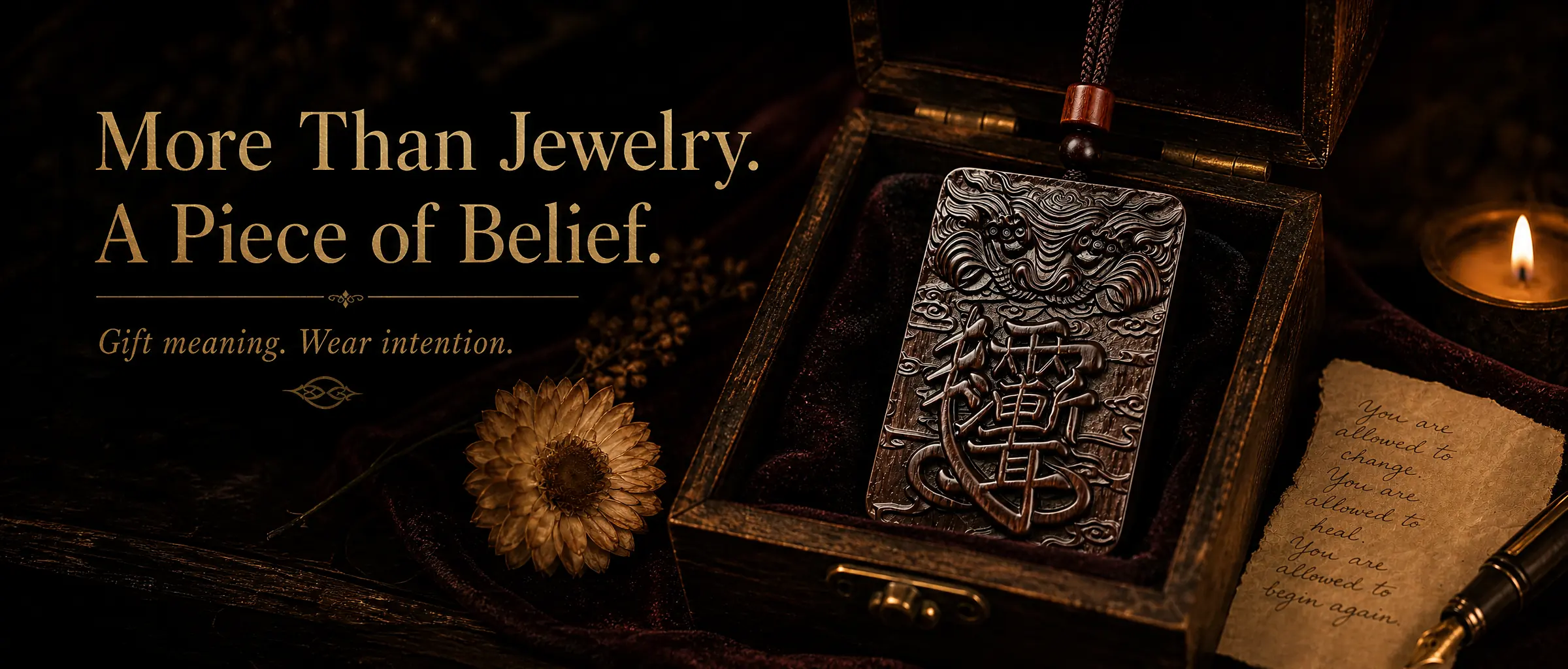
Each piece ships insured in a linen pouch with a hand-numbered card. Founding-piece orders ship with upgraded priority service.
What if I want to return it?
Our standard refund and return policy applies — see the Shipping & Returns page for full terms.
Does it guarantee protection or fortune?
Our pieces are decorative and cultural objects. Meanings of protection, resilience, and fortune reflect Chinese Taoist tradition and personal belief — not guaranteed outcomes.
This piece is a decorative and cultural object. Meanings of protection, resilience, or fortune reflect Chinese Taoist tradition and personal belief — not guaranteed outcomes.