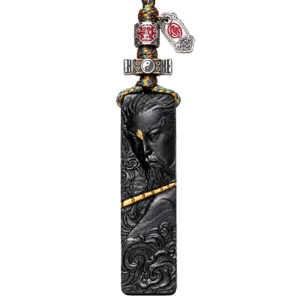
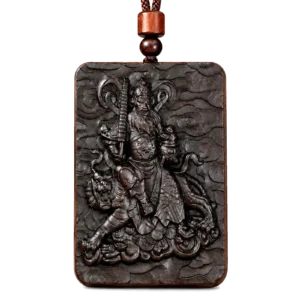
The Navigator – Lightning-Struck Jujube Seven-Gems Big Dipper Pendant Car Charm
One of One — this exact piece
Founding piece: early orders ship with upgraded priority service, gift boxing, and a hand-numbered card.
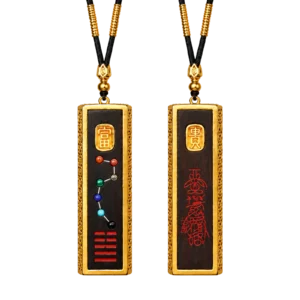
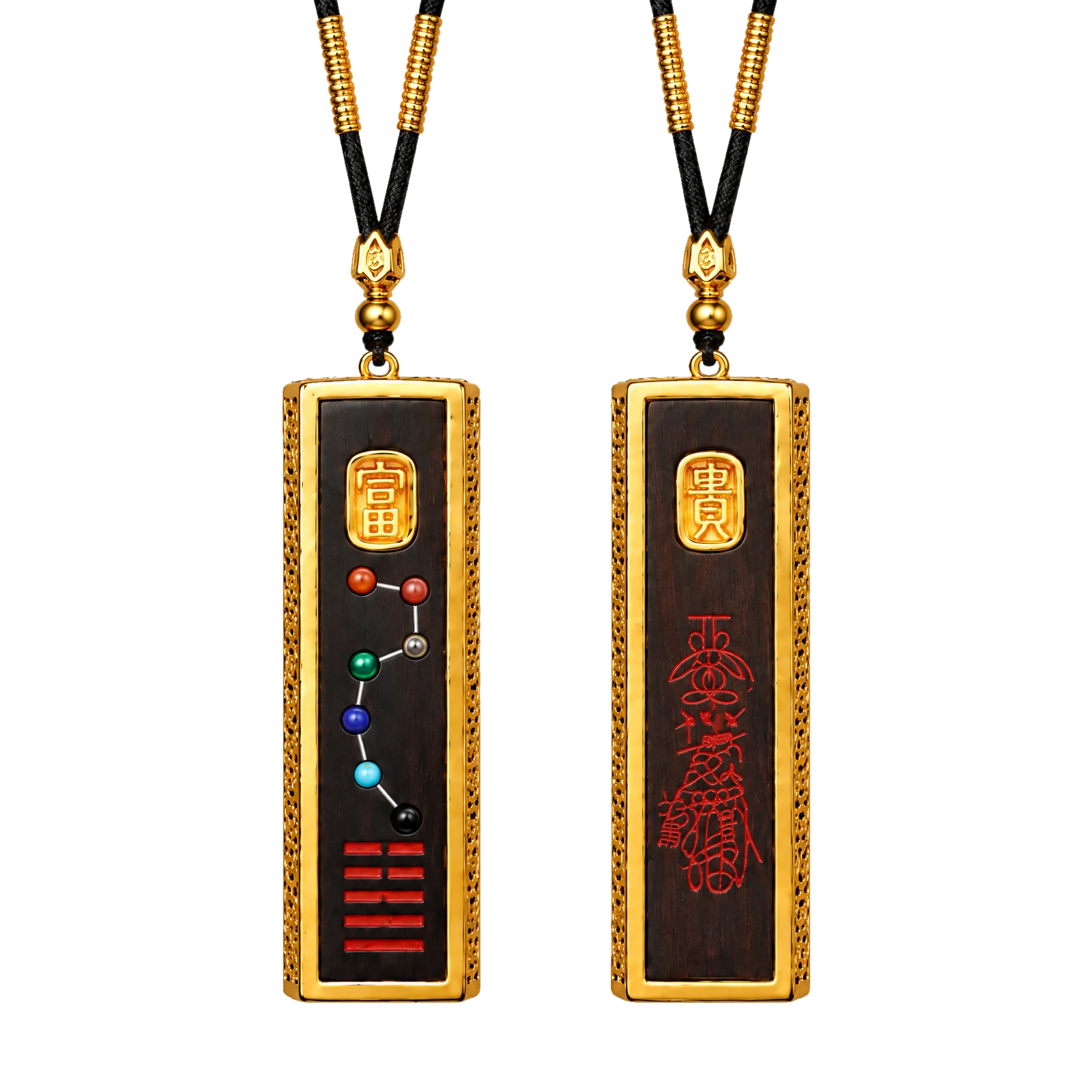
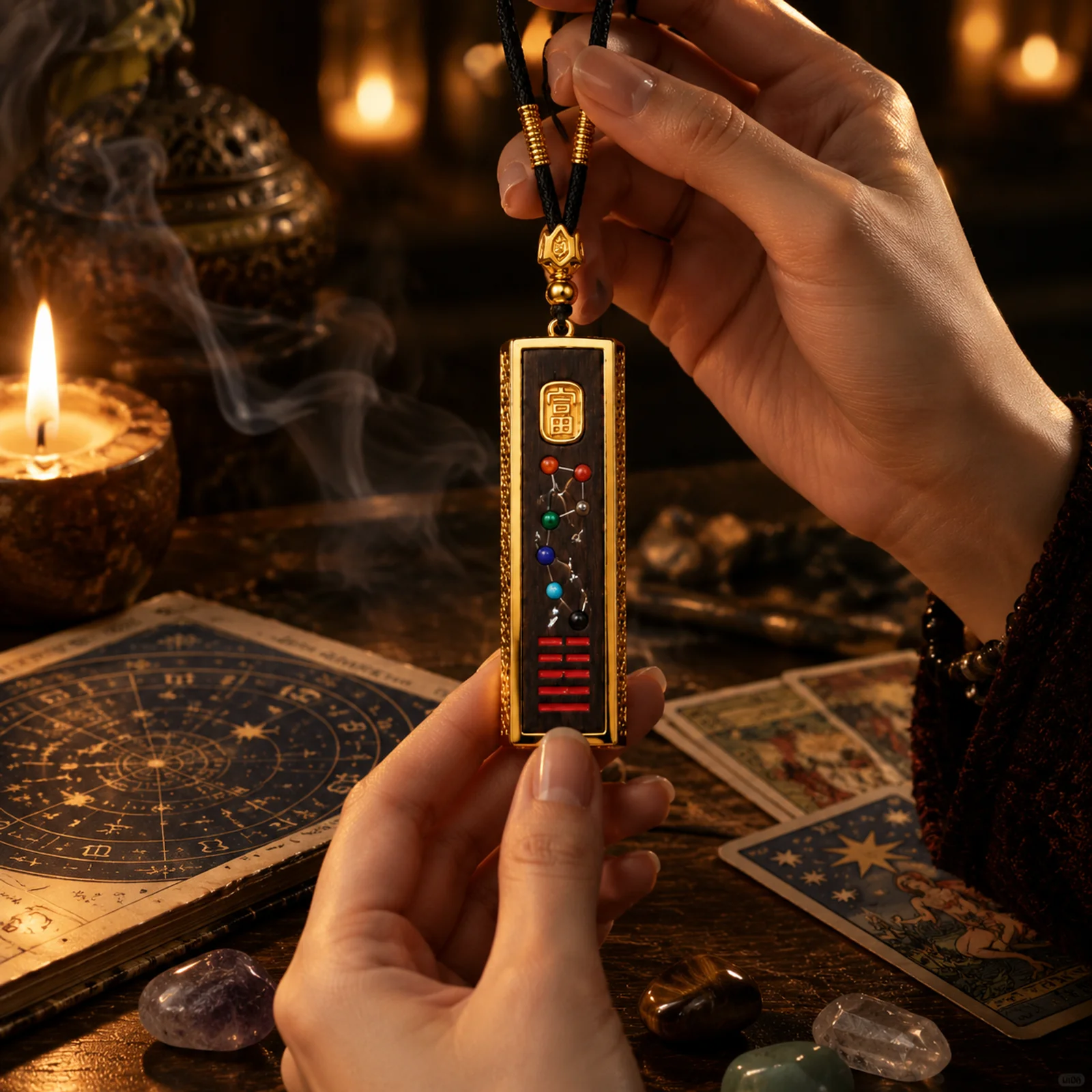
Seven silver-ringed gems set in the Northern Dipper across a long bar of struck jujube — a quiet compass for the night roads.
$109.00
Payment Methods:
七星 · 引航
THE NAVIGATOR
A long-bar plaque of struck jujube set with seven silver-ringed gems in the formation of the Northern Dipper — the seven stars Chinese astronomy has steered by for some two thousand years, hung where your night roads begin.
Among the instruments of the court, one is assigned to the dark that has no storm — the long night, the unlit road, the year that will not lift. Chinese tradition answered this with the Northern Dipper: seven stars so dependable that calendars and compasses were built on their turning, and the Big Dipper rite remains a living Taoist observance. The Navigator holds that office in The Eleven. Its making is the collection’s most patient: after the carving, a second artisan sets the seven silver-ringed gems one by one, matching the Dipper’s proportions by eye — because a star chart drawn with a ruler is a diagram, and this is not a diagram. It is a route home, drawn in seven lights, for people who drive at night and mean to arrive. Chosen by lightning. Carved by hand. One of one.
THE CRAFT
The Seven That Never Set
Tianshu, Tianxuan, Tianji, Tianquan, Yuheng, Kaiyang, Yaoguang — the seven lamps of the north, named star by star. The Dipper wheels through the year like a celestial hand; sailors and caravans read it to find their way. Yours hangs lower, and closer.
Named, Not Generic
The seven gems stand for seven named stars — the copy can list them because the tradition names them; a generic “stars” design cannot.
The Sky's Steering Hand
The Dipper’s handle wheels around the pole through the year — calendars and compasses were built on that turn; it is the original navigation instrument.
Lower, and Closer
Sailors read it over open water; you read it over the dashboard — same seven stars, at reading-for-your-own-road distance.
THE CRAFT
Set Like Stars, Not Like Studs
Seven hand-cut silver bezels, placed by eye against the wood’s grain — the craftsmanship panel shows the tweezers, the loupe, the steady hand. No jig, no template: seven stars set the way a constellation is, not the way a drill pattern is.
Set by Eye
Each bezel seat is judged against the grain by eye — the placement wavers a hair, as a real constellation does against the dark.
A Second Artisan's Patience
After the carving comes the setting: a second pair of hands, loupe and tweezers, seven seats in a day’s work — inlay is where carving ends and nerve begins.
Proof Is on the Panel
The craft panel photographs the tools mid-work — tweezers, bezels, raw seats — so the “hand inlay” claim arrives with its receipts.
THE CRAFT
From Darkness to Dawn
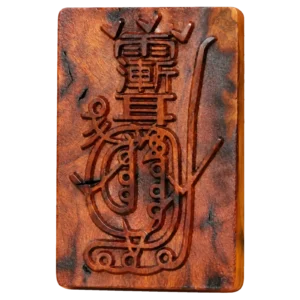
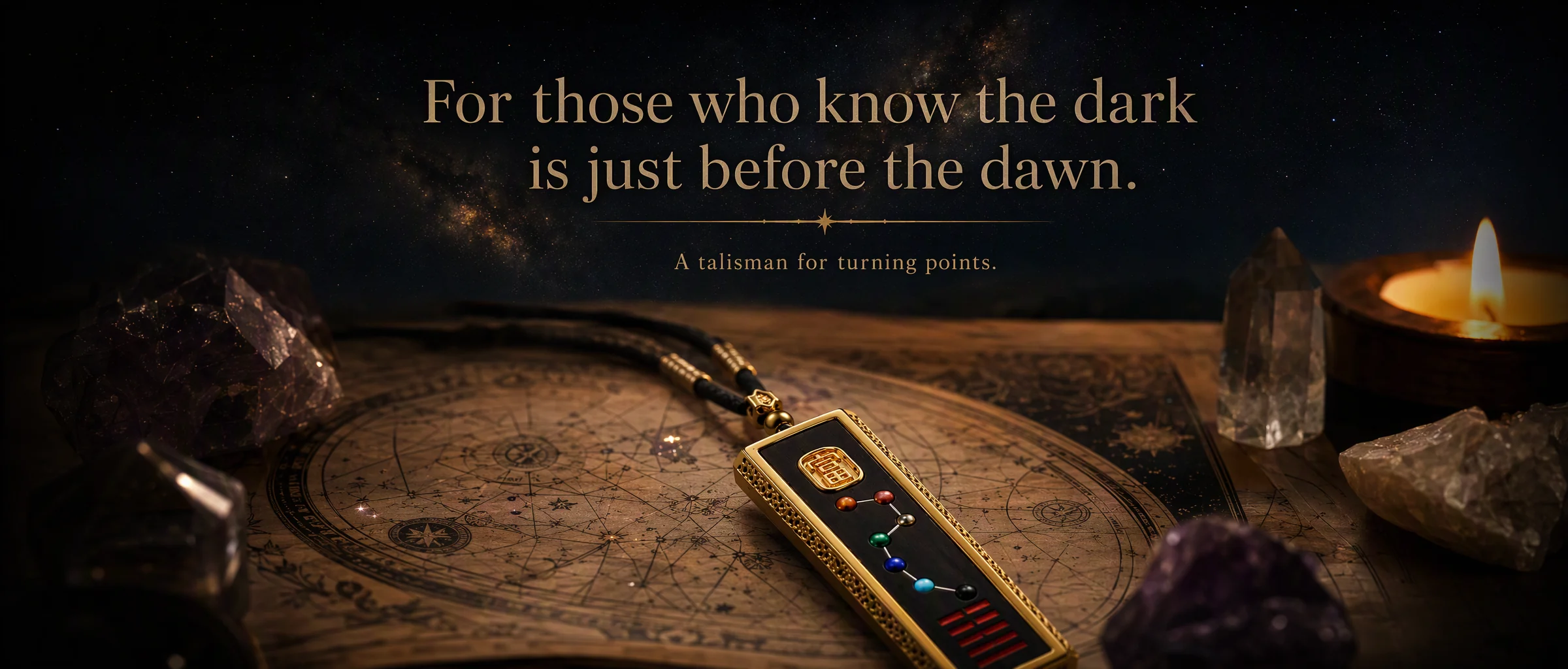
Seven points of light set into storm-darkened wood — darkness and stars in the same piece, which is what a night road actually is. The I Ching panel beside the crimson talisman reads it as a wish: the long dark is a passage, not a place.
Darkness Included
The wood itself is the night sky — the strike darkened it — so the piece carries both terms of the journey: the dark, and the lights through it.
The I Ching Panel's Reading
As the banner says, the signs and the crimson talisman frame it as a wish — the long dark read as a passage, in the oldest book of changes.
A Living Observance Behind It
The Big Dipper rite remains a living Taoist observance — the stars on this wood are not extinct mythology but a practice still kept.
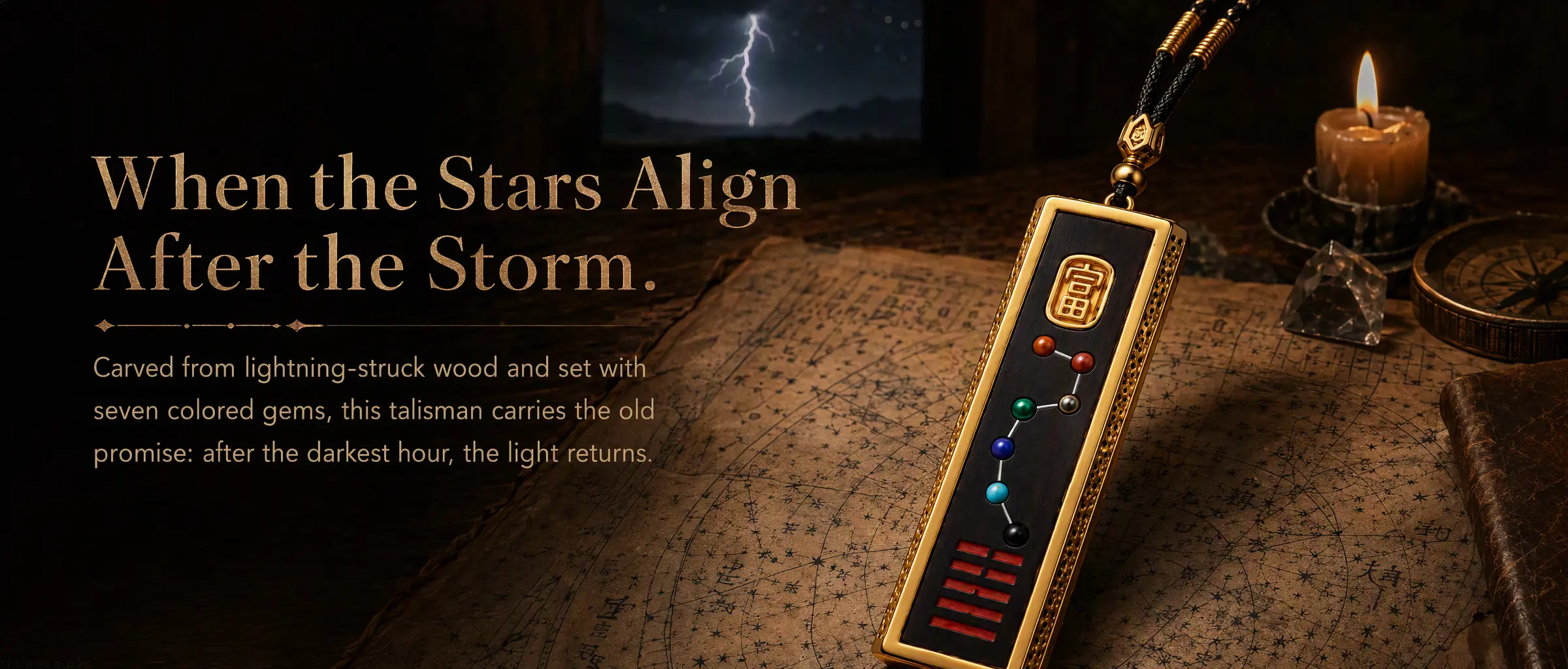
Yes. Each piece is carved from jujube wood recovered after a natural lightning strike — the dense, darkened grain is the wood's own record of that event.
Why is every piece one of one?
Lightning marks every tree differently, and each carving follows the grain of that single piece of wood. No two talismans are alike; the piece you see is the piece you receive.
How do I care for the wood?
Keep it dry, avoid prolonged direct sunlight, and rub occasionally with a drop of natural oil to keep the grain deep and quiet.
How is it shipped?
Each piece ships insured in a linen pouch with a hand-numbered card. Founding-piece orders ship with upgraded priority service.
What if I want to return it?
Our standard refund and return policy applies — see the Shipping & Returns page for full terms.
Does it guarantee protection or fortune?
Our pieces are decorative and cultural objects. Meanings of protection, resilience, and fortune reflect Chinese Taoist tradition and personal belief — not guaranteed outcomes.
This piece is a decorative and cultural object. Meanings of protection, resilience, or fortune reflect Chinese Taoist tradition and personal belief — not guaranteed outcomes.










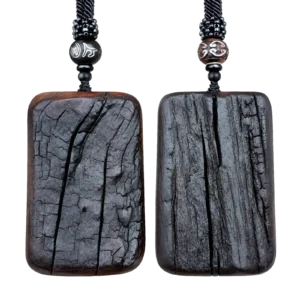 Natural
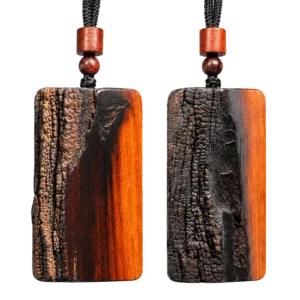 Natural